Where Is Vietnam on the World Map? Location Explained
 By Jenna Jolie
 Nestled in the heart of Southeast Asia, Vietnam boasts a unique S-shaped silhouette that stretches from mountainous northern highlands to lush tropical deltas in the south. "Where is Vietnam located?" is a fundamental question for curious minds, aspiring travelers, and global business professionals.
This article provides a detailed, professional overview of Vietnam's geographical placement, its regional significance, and practical information for those planning to explore this captivating country.
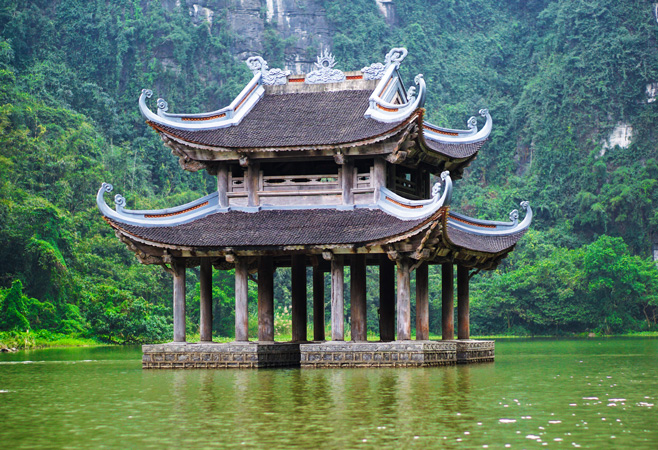 Vietnam, geographically located, stretches along the eastern edge of mainland Southeast Asia
Vietnam's Exact Geographic Coordinates
At its core, Vietnam is situated on the easternmost part of the Indochinese Peninsula in Southeast Asia. Its precise coordinates are:
Latitude: Approximately between 8.5° and 23.5° North.
Longitude: Between 102° and 110° East.
This significant north–south span of roughly 1,650–1,700 kilometers accounts for the country’s climatic and topographic diversity—accounts for the country's remarkable climatic and topographic diversity, which we will explore in detail.
Vietnam in the Context of Southeast Asia
Vietnam is an integral part of the dynamic and culturally rich Southeast Asian region. It is a member of the Association of Southeast Asian Nations (ASEAN), a bloc promoting economic and political cooperation. Understanding its position relative to its neighbors is key to grasping its regional role.
Land Borders (Total: approximately 4,600 km)
North: Vietnam shares its longest land border with China (1,281 km). This historic border has facilitated trade and cultural exchange for centuries.
West: Vietnam borders Laos (2,130 km) and Cambodia (1,158 km). The border with Laos largely follows the Annamite Mountains, while the border with Cambodia spans parts of the Mekong Delta, the Central Highlands, and southeastern Vietnam.
 Ha Giang province has borders with China
Maritime Borders
Vietnam's eastern and southern sides are bounded by extensive coastlines along the South China Sea (referred to in Vietnam as the East Sea), with over 3,260 km of coastline. This grants it strategic access to major maritime trade routes. It also shares maritime boundaries with Thailand through the Gulf of Thailand, and with the Philippines, Malaysia, and Indonesia in the South China Sea.
How Location Influences Vietnam's Climate
Vietnam's elongated shape means it experiences multiple climate patterns:
North: Humid subtropical climate with four distinct seasons, including a cool winter (Dec-Feb).
Central Vietnam is a transitional climate zone, often experiencing a later rainy season and being more prone to typhoons, particularly from September to November
South: Tropical climate with two main seasons: rainy (May-Oct) and dry (Nov-Apr).
Best Time to Visit: Generally, spring (February to April) offers the most consistent weather nationwide, while autumn conditions vary by region—remaining pleasant in the north but wetter in central areas.
Time Zone, Flight Times, and Accessibility
Time Zone: Vietnam Standard Time (GMT+7). It does not observe Daylight Saving Time.
Accessibility: Served by three major international airports: Noi Bai (Hanoi) in the north, Da Nang in the center, and Tan Son Nhat (Ho Chi Minh City) in the south.
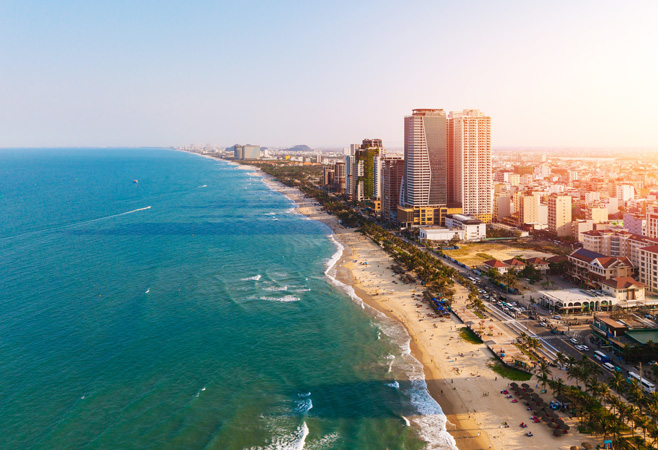 Vietnam’s location on the world map highlights its long coastline and central position in Southeast Asia
Sample Flight Times:
London to Hanoi: ~12 hours
Sydney to Ho Chi Minh City: ~9 hours
Los Angeles to Hanoi: ~17 hours (with stopover)
Singapore to Hanoi: ~3.5 hours
Why Vietnam's Location Makes It a Must-Visit Destination
Its strategic position makes Vietnam a perfect gateway for Southeast Asian exploration and a destination rich in its own right.
Cultural Crossroads: Influences from China, India, and France blend with indigenous traditions.
Culinary Heartland: Location provides access to fresh seafood, fertile deltas for rice and herbs, and a renowned food culture.
Adventure Hub: From mountain trekking in Sapa to kayaking in Halong Bay and cruising the Mekong Delta.
Regional Travel Base: Easily combine a trip to Vietnam with visits to Laos, Cambodia, or Thailand via land or short flights.
Vietnam's Proximity to Major Asian Destinations
For travelers planning regional itineraries, understanding Vietnam's location relative to other Asian destinations proves invaluable. The country's position makes it an excellent base for exploring Southeast Asia and beyond.
Distance from major cities:
Bangkok, Thailand: approximately 900 kilometers west
Phnom Penh, Cambodia: approximately 230 kilometers southwest
Vientiane, Laos: approximately 680 kilometers northwest
Singapore: approximately 1,750 kilometers south
Hong Kong: approximately 1,200 kilometers northeast
Seoul, South Korea: approximately 3,400 kilometers northeast
Tokyo, Japan: approximately 4,100 kilometers northeast
These relatively short distances mean Vietnam connects easily with other Asian destinations via numerous daily flights, making multi-country tours highly accessible.
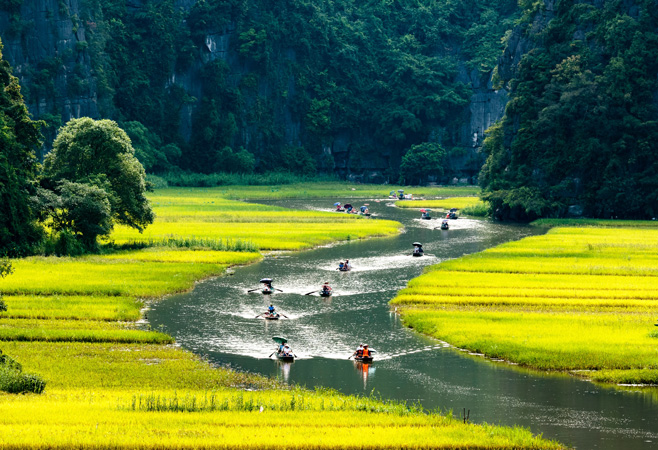 Understanding where Vietnam is located helps travelers plan more efficiently
Frequently Asked Questions (FAQs)
Where exactly is Vietnam located on the map?
Vietnam is in Southeast Asia, on the Indochina Peninsula, bordered by China to the north, Laos and Cambodia to the west, and the South China Sea to the east and south.
What continent is Vietnam in?
Vietnam is located on the Asian continent, specifically in the southeastern region known as Mainland Southeast Asia or the Indochinese Peninsula.
Is Vietnam close to Thailand?
While Vietnam and Thailand are neighboring Southeast Asian countries, they do not share a direct land border. They are separated by Laos and Cambodia. The distance from Hanoi to Bangkok is approximately 1,000 km (620 miles), a short flight of approximately 1.75 to 2 hours
What body of water is Vietnam on?
Vietnam has an extensive coastline along the South China Sea (East Sea). The southwest coast also fronts the Gulf of Thailand.
Is Vietnam near China?
Yes. Vietnam shares its northern border with China.
Is Vietnam an island country?
No. Vietnam is a mainland country with a long coastline along the South China Sea.
Which sea borders Vietnam?
Vietnam borders the South China Sea to the east and south.
Is Vietnam in the northern or southern hemisphere?
Vietnam is located in the Northern Hemisphere.
Why is Vietnam’s location important?
Vietnam’s location influences its climate, culture, trade, and popularity as a travel destination.
What is the best time to visit Vietnam based on its location?
The best time depends on which region you're visiting. Generally, March to April and September to November offer good weather countrywide. Northern Vietnam is best in spring and autumn, while southern Vietnam is ideal during the dry season from December to April.
Can I visit multiple countries easily from Vietnam?
Yes, Vietnam's location makes it an excellent base for exploring Southeast Asia. Cambodia, Laos, and Thailand are all accessible via short flights or land crossings, making multi-country itineraries practical and popular.
Which part of Vietnam has the best beaches?
Central Vietnam (Da Nang, Hoi An, Nha Trang) and the southern island of Phu Quoc are world-renowned for their white sands and clear waters.
Ready to Experience Vietnam?
Now that you understand where Vietnam is located and what makes this Southeast Asian gem so special, it's time to start planning your journey. Vietnam's perfect combination of natural beauty, rich history, fascinating culture, and delicious cuisine awaits your discovery.
Apply for your Vietnam e-visa today and take the first step toward experiencing one of Asia's most captivating destinations. The simple online application process takes just minutes, and you'll receive approval within days. Let's contact us to get the Vietnam e-visa now!
Related Articles
- Vietnamese Zodiac Years: 12 Animals, Years & Personality Traits
- Cham Island Travel Guide: Things to Do, Tours & Travel Tips
- Vietnam Emergency Number Guide: Who to Call in an Emergency
- Vietnam Golden Visa Guide: Everything You Need to Know
- What Is the Vietnamese Hat? History, Culture & Meaning
- Best Vietnam eSIM for Tourists: Plans, Prices & Setup
- Vietnam Sleeper Bus Guide: Experience, Comfort & Safety
- Vietnam Visa for Children: Rules, Requirements & Family Guide
- Vietnam Nightlife Guide 2026: Best Cities, Bars & Night Experiences
- Vietnam Visa for Cruise Travelers: Rules, Ports & Application Guide

HOW CAN WE HELP?
 NEED HELP 24/7
 United States
+1 949 346 9868
United States
+1 949 346 9868
 United Kingdom
+44 0330 822 7696
United Kingdom
+44 0330 822 7696
 Singapore
+65 6485 3630
Singapore
+65 6485 3630
 Viber
+65 8174 8526
Viber
+65 8174 8526

APPLY WITH CONFIDENCE