What Is the Vietnamese Hat? History, Culture & Meaning
 By Jenna Jolie
 Known locally as the nón lá, this traditional conical hat has become one of the most recognizable symbols of Vietnamese culture. More than just a fashion accessory or tourist souvenir, the Vietnamese hat represents centuries of craftsmanship, resilience, and everyday life.
Whether you're planning a trip to Vietnam, exploring Vietnamese culture, or looking for an authentic souvenir, this guide covers everything you need to know about the Vietnamese hat, including its history, meaning, types, craftsmanship, and where to buy one.
 The traditional Vietnamese hat remains an important part of daily life and rural identity
What Is a Vietnamese Hat?
The Vietnamese hat, also known as nón lá, is a traditional hat with a cone shape and is mainly constructed from palm leaves, bamboo, and natural fibers. Its distinctive conical shape helps protect wearers from strong sunlight and seasonal rain.
The name ‘nón lá' literally means ‘leaf hat' and the name is again appropriate as the original material used in the making of the hat is leaves.
Currently, the hat of Vietnam is used for many purposes:
- To protect from the sun
- Rain protection
- Cultural symbol
- Traditional fashion accessory
- The most popular souvenir item for visitors
- Decorative artwork
Although Vietnam has modernized rapidly over recent decades, the Vietnamese hat remains deeply embedded in daily life and national identity.
The History of the Vietnamese Hat
The Vietnamese hat has been part of the country's cultural heritage for thousands of years. The Vietnamese hat is believed to have existed for thousands of years, with evidence appearing in ancient carvings and archaeological discoveries. The cones themselves have been found in archaeological sites and ancient carvings in Vietnam dating back to 2,500-3,000 years ago.
The hat has been the traditional protection for the Vietnamese people, from farmers to fishermen, traders to laborers, for centuries, as it offers protection from the tropical climate of Vietnam.
Why Is the Vietnamese Hat So Important?
More than just a garment for the head, the Vietnamese hat is an emblem of culture.
A Symbol of Rural Life
The nón lá has always been linked to the agricultural tradition of Vietnam. These hats are worn by rice growers when they plant and harvest rice and work in the sun.
The Vietnamese hat has become a strong symbol of Vietnam's history and economy, with the image of a farmer wearing a Vietnamese hat in a rice field.
Historical images of Vietnamese women
The combination of the Vietnamese hat with the traditional áo dài has become one of the most recognizable images in Vietnamese culture.
A Representation of Vietnamese Women
The Vietnamese hat is often paired with the traditional áo dài, creating one of the most iconic images in Vietnamese culture.
In literature, music, and art, the hat frequently symbolizes:
- Elegance
- Beauty
- Modesty
- Femininity
This cultural connection has helped preserve its popularity even in urban areas.
A National Cultural Icon
Today, the Vietnamese hat appears in:
- Tourism campaigns
- Cultural festivals
- Traditional performances
- Souvenir shops
- International exhibitions
It serves as an instantly recognizable representation of Vietnam around the world.
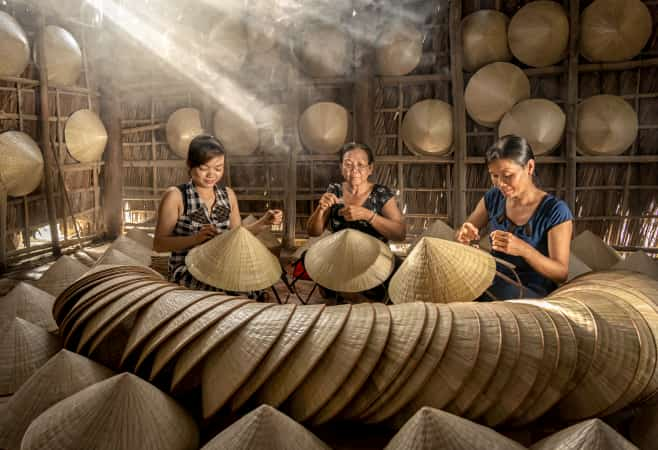 Handcrafted nón lá hats showcase the skill and artistry of Vietnamese artisans
How Is a Vietnamese Hat Made?
One reason the Vietnamese hat remains special is the intricate craftsmanship involved in its production.
Each authentic nón lá is typically handmade through a process that requires patience and skill.
Step 1: Collecting Palm Leaves
Artisans select young palm leaves and carefully dry them under controlled conditions.
The leaves are then flattened and treated to maintain their color and durability.
Step 2: Creating the Bamboo Frame
Thin bamboo strips are shaped into circular rings of varying sizes.
These rings create the hat's signature conical structure.
Step 3: Assembling the Hat
The palm leaves are arranged in layers over the bamboo frame.
Artisans stitch the leaves together using fine thread, ensuring a smooth and symmetrical appearance.
Step 4: Finishing Touches
The finished hat may include:
- Silk chin straps
- Decorative embroidery
- Painted artwork
- Protective coatings
Depending on complexity, a single Vietnamese hat can take several hours to complete.
How to Wear Vietnamese Hats: Cultural Guidelines
For Women (Traditional Style)
Pair with áo dài for formal occasions, cultural performances, or weddings
Nón bài thơ: Hold up to light to reveal hidden poems/pictures
Nón Ba tầm: Wear with elegant garments, not work clothes
For Daily Use (Modern Style)
Farm workers & market vendors: Wear standard nón lá for sun/rain protection
Tourists & commuters: Lightweight nón lá for outdoor activities
Many women also wear nón lá casually with dresses and other everyday outfits.
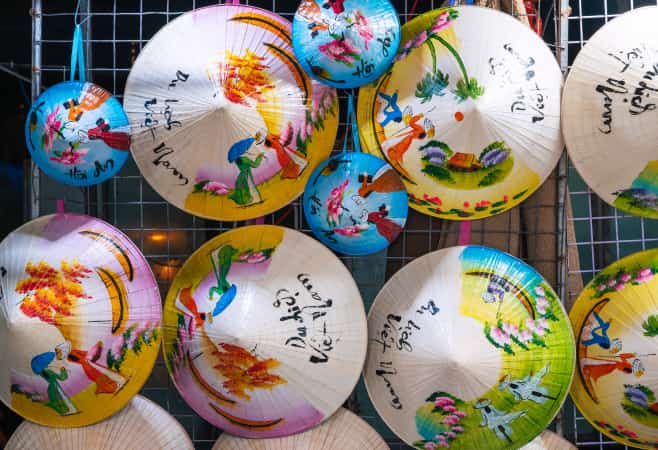 Discover the history and meaning behind Vietnam’s famous conical hat
Where to Buy an Authentic 'Nón Lá'
Prices to Expect
A standard conical hat typically costs 50,000–150,000 VND (roughly $2–$6 USD), while decorative poetry conical hats (nón bài thơ) or high-quality artisan hats can range from 200,000–500,000 VND (approximately $8–$20 USD).
Where to Buy
At craft villages directly — Chuông (Hanoi), Phú Cam or Tây Hồ (Hue), Thới Lai (Cần Thơ). This is the best option: you see how the hat is made, you buy from the people who make it, and the quality is reliably good.
At reputable market stalls — Đồng Xuân Market in Hanoi, Đông Ba Market in Hue, and Bến Thành Market in Ho Chi Minh City all have sections selling traditional handicrafts. Quality varies more here, so inspect carefully.
Through certified artisan cooperatives — Several NGO-supported cooperatives work with village artisans to sell their work at fair prices, often with certification of origin. These are worth seeking out.
Workshop Experiences
Visitors can join hands-on workshops in craft villages to learn the hat-making process from local artisans — weaving, stitching, and shaping palm leaves to create a unique souvenir.
These workshops typically cost 150,000–250,000 VND per person and run for 1–2 hours.
Tips for buying authentic nón lá:
- Look for hand-stitched bamboo rings (16–20 rings)
- Check for uniform palm leaf weaving without gaps
- Huế nón bài thơ: Verify poems visible under light
- Avoid plastic-coated mass-produced versions (not traditional)
 The nón lá is Vietnam’s iconic conical hat and a symbol of traditional culture
Frequently Asked Questions About the Vietnamese Hat
What is the Vietnamese hat called?
The Vietnamese conical hat is called nón lá (pronounced "nohn lah"), meaning "leaf hat." It is also sometimes called the Vietnamese conical hat, the palm-leaf hat, or — in older English travel literature — the Annamese hat.
What is the Vietnamese hat made of?
Traditional hats are made from palm leaves, bamboo frames, and natural fibers.
Can tourists buy Vietnamese hats?
Absolutely. Vietnamese hats are widely available throughout the country and remain one of the most popular souvenirs.
Can I bring a nón lá home on the plane?
Yes. Smaller-sized hats fit in overhead bins or can be checked in a rigid case. Mini nón lá — sold specifically as easy-to-pack souvenirs — are available throughout Vietnam and are popular gifts. A full-size hat is more fragile; wrapping it carefully in clothing inside your checked luggage usually works well.
What is a Nón Bài Thơ (Poem Hat)?
A special type of conical hat from Huế with poems or pictures hidden between two layers of leaves. The images appear when you hold the hat up to the sunlight.
Can I wear a nón lá with modern clothing?
Answer: Absolutely! Many Vietnamese women wear nón lá casually with dresses, jeans, or casual outfits for sun protection.
Are Vietnamese hats still used today in Vietnam?
Yes, but declining among younger generations. Still common among farmers, market vendors, tourists, and in cultural events.
Is the conical hat still worn in modern Vietnam?
Yes — by farmers, market vendors, and boat women daily. It's also a popular souvenir and fashion item.
Final Thoughts
The Vietnamese hat is much more than a simple piece of headwear. It tells the story of Vietnam's history, agricultural traditions, artistic heritage, and cultural identity.
For travelers, purchasing a Vietnamese hat offers more than a memorable souvenir—it provides a tangible connection to the people, traditions, and craftsmanship that have shaped Vietnam for generations.
Related Articles
- Vietnamese Zodiac Years: 12 Animals, Years & Personality Traits
- Cham Island Travel Guide: Things to Do, Tours & Travel Tips
- Vietnam Emergency Number Guide: Who to Call in an Emergency
- Vietnam Golden Visa Guide: Everything You Need to Know
- What Is the Vietnamese Hat? History, Culture & Meaning
- Best Vietnam eSIM for Tourists: Plans, Prices & Setup
- Vietnam Sleeper Bus Guide: Experience, Comfort & Safety
- Vietnam Visa for Children: Rules, Requirements & Family Guide
- Vietnam Nightlife Guide 2026: Best Cities, Bars & Night Experiences
- Vietnam Visa for Cruise Travelers: Rules, Ports & Application Guide

HOW CAN WE HELP?
 NEED HELP 24/7
 United States
+1 949 346 9868
United States
+1 949 346 9868
 United Kingdom
+44 0330 822 7696
United Kingdom
+44 0330 822 7696
 Singapore
+65 6485 3630
Singapore
+65 6485 3630
 Viber
+65 8174 8526
Viber
+65 8174 8526

APPLY WITH CONFIDENCE