Official Vietnam Flag: History, Meaning, Colors, and Usage
 By Jenna Jolie
 The official Vietnam flag—instantly recognizable with its bold red background and golden star—is one of the most meaningful national symbols. For travelers visiting Vietnam, understanding the flag’s history, symbolism, colors, and etiquette can deepen your appreciation of the country’s identity and the places you explore.
This guide provides an overview of the official Vietnam flag, including its origins, cultural significance, design specifications, and where tourists can see it across the country.
- Overview of the Official Vietnam Flag
- History of the Vietnam Flag
- How the Vietnam Flag Is Used Officially
- Vietnam Flag Laws and Etiquette (What Travelers Should Know)
- Vietnam Flag in Culture and Daily Life
- Best Places to See & Photograph the Vietnam Flag as a Traveler
- Vietnam Flag Souvenirs – What You Can & Cannot Buy
- FAQs About the Official Vietnam Flag
- Final Thoughts: Why the Vietnam Flag Matters to Travelers
Overview of the Official Vietnam Flag
The official national flag of the Socialist Republic of Vietnam is known as “Cờ đỏ sao vàng,” which translates to “the red flag with the gold star”. The red flag with a golden star was first adopted in 1945 by the Democratic Republic of Vietnam and was reaffirmed as the national flag on July 2, 1976, following the reunification of North and South Vietnam.
For travelers, the Vietnam flag is more than a symbol—it's a visual introduction to Vietnam’s story of independence, unity, and national pride. You will see it displayed on government buildings, historical monuments, city streets, educational institutions, and during major national events.
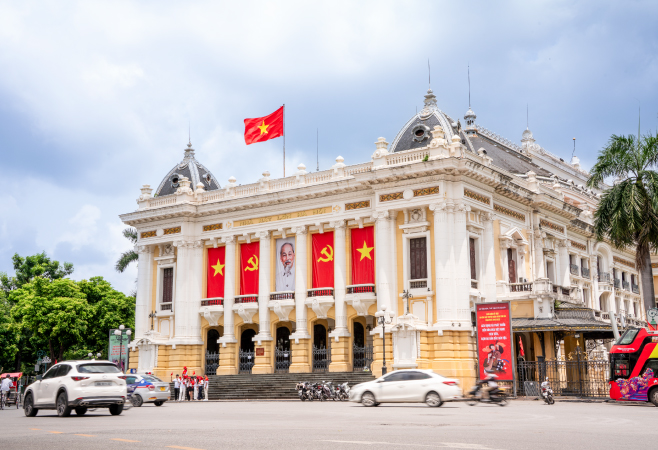 The official Vietnam flag is waving in the wind at the Hanoi Opera House
What the Vietnam Flag Looks Like (Design Explained)
The design is simple yet powerful. The official Vietnam flag features:
- A solid red background
- A large five-pointed golden star in the center
- An official proportion of 2:3
Symbolic Design Elements
- Red background: Represents revolution, sacrifice, and the nation’s struggle for independence.
- Golden star: Symbolizes the guiding leadership and unity of the Vietnamese people.
- The minimalist design reflects the country’s revolutionary history and collective aspirations.
Vietnam Flag Meaning and Symbolism
Understanding the symbolism behind the Vietnam flag allows travelers to appreciate its deeper cultural value.
Meaning of the Red Background
The red field represents:
- The bloodshed and sacrifices made during Vietnam’s fight for independence
- Courage, resilience, and national strength
- The country’s socialist revolutionary heritage
Meaning of the Golden Star
The gold star symbolizes:
- The leadership of the Vietnamese Communist Party
- The hope and unity of the people
Meaning of the Five Points
Each of the five points is commonly interpreted as representing key social groups such as:
- Workers
- Peasants
- Soldiers
- Intellectuals
- Youth
Together, these elements represent harmony and collective responsibility.
Standard Vietnam Flag Sizes and Proportions
The official ratio of the Vietnam flag is 2:3, meaning the height is two units and the width is three. Common sizes used in Vietnam include:
- Small flags: 20 × 30 cm
- Medium flags: 40 × 60 cm or 60 × 90 cm
- Large flags: 80 × 120 cm or 100 × 150 cm
- Giant ceremonial flags: Up to 2 × 3 m or larger
Proportion of the Star
In standard designs, the golden star is proportioned to fit inside an imaginary circle with a diameter of about one-third of the flag’s height.
The star is vertically centered.
For travelers, this detail is helpful when purchasing an authentic souvenir.
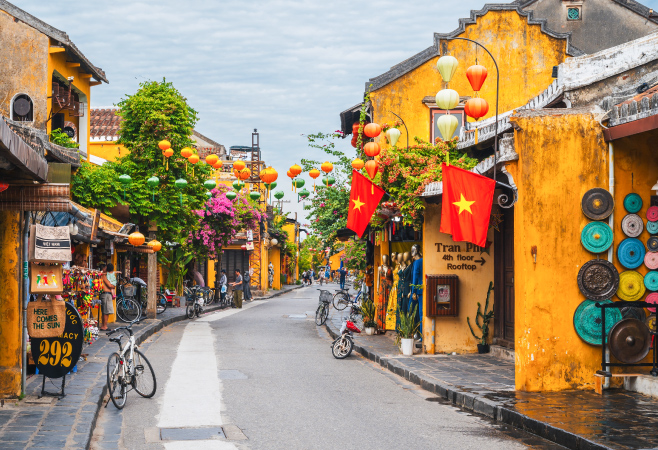 A Vietnamese flag is displayed outside homes and shops on national holidays
History of the Vietnam Flag
The story of the Vietnam flag is closely tied to the nation’s long path to independence.
Early Revolutionary Origin (1940s): The earliest versions appeared around 1940, created for the revolutionary movement against colonial rule.
Adoption by North Vietnam (1955): On November 30, 1955, the flag officially became the emblem of North Vietnam.
National Adoption After Reunification (1976): Following reunification, the flag became the official emblem of the Socialist Republic of Vietnam. Since then, it has remained unchanged—symbolizing unity and shared national aspirations.
How the Vietnam Flag Is Used Officially
Travelers will see the Vietnam flag throughout the country, especially during important national days.
Government & National Institutions
The flag flies prominently at:
- Government offices
- Municipal buildings
- Border checkpoints
- Military zones
Schools and Public Institutions
Schools raise the flag daily during ceremonies, symbolizing patriotism and civic pride.
Diplomatic Use
Vietnam embassies and missions abroad always display the flag according to international protocol.
National Holidays and Ceremonies
The most visible displays occur on:
- National Day (September 2)
- Reunification Day (April 30)
- Lunar New Year (Tet)
During these periods, entire streets are decorated in red and gold, offering visitors an unforgettable cultural insight.
Also, many homes and businesses display the flag during national holidays or special events, especially in northern Vietnam. You’ll see it on stickers and souvenirs.
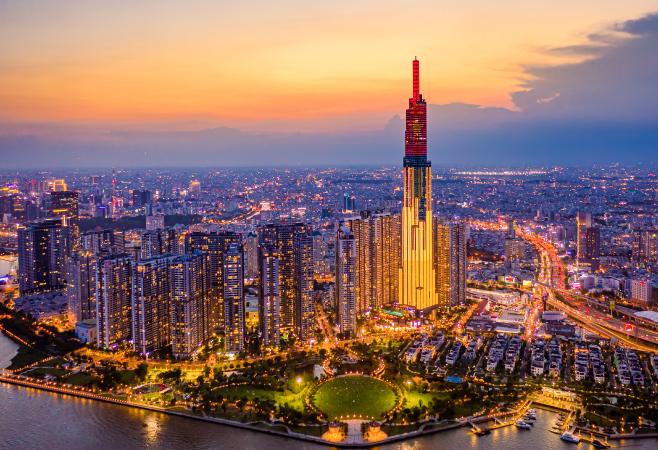 The Vietnam flag is displayed on the Landmark 81 building
Vietnam Flag Laws and Etiquette (What Travelers Should Know)
While Vietnam is welcoming and relaxed, the national flag is taken seriously as a state symbol. Here are essential etiquette rules for travelers:
Displaying the Flag
It must be clean, intact, and properly oriented.
It should be placed in the position of honor during displays.
When displayed indoors, the star must face forward and be unobstructed.
Respecting the Flag
Travelers should avoid:
- Damaging, stepping on, or discarding the flag carelessly
- Using the flag in commercial or decorative contexts in a disrespectful or inappropriate manner
- Wearing the flag on clothing in a disrespectful manner
Knowing these rules helps travelers interact respectfully with local customs.
Vietnam Flag in Culture and Daily Life
The national flag holds a prominent place in Vietnamese pride and identity. Travelers will encounter it:
- During festivals and patriotic parades
- On balconies and storefronts during national holidays
- In school ceremonies
- At major sporting events (SEA Games, Olympics), where Vietnamese fans wave it passionately
- The flag is a unifying force across regions and generations.
Best Places to See & Photograph the Vietnam Flag as a Traveler
If you want to experience the flag in meaningful locations, add these destinations to your itinerary:
1. Ba Dinh Square, Hanoi
The site where President Ho Chi Minh declared independence in 1945. The flag flies proudly above the square every day.
2. Ho Chi Minh Mausoleum Complex
A sacred place for Vietnamese people, surrounded by immaculate gardens and ceremonial flags.
3. Hanoi Flag Tower (Cột Cờ Hà Nội)
One of the oldest flag monuments in Vietnam, where a massive national flag flies daily. The tower flies a large national flag daily and occasionally hosts ceremonial events – one of the most powerful moments to witness.
4. Lung Cu Flag Tower – Ha Giang (northernmost point of Vietnam)
Massive 33.15-meter-high flag visible from the China border – epic for adventure travelers.
5. Fansipan Peak, Sapa
Whether reaching the summit by trekking or cable car, visitors find the Vietnamese flag standing tall against the sky. The sight of this flag among the clouds, with mountains stretching endlessly below, creates an awe-inspiring and humbling experience.
6. Hue Flag Tower, Hue city
The flag that stands within the Imperial Citadel is a source of immense pride for Hue's citizens.
7. Independence Palace, Ho Chi Minh City
This palace displays the Vietnamese flag as a symbol of reunification victory and hard-won peace.
8. Historic Museums
Including the Vietnam Military History Museum, War Remnants Museum, and Ho Chi Minh Museum.
9. Public Streets During National Holidays
Cities like Hanoi, Ho Chi Minh City, Hue, and Da Nang become covered in red and gold—an unforgettable sight for visitors.
10. Border Gates and Ports
Travelers arriving by land or sea will immediately see the official Vietnam flag displayed prominently.
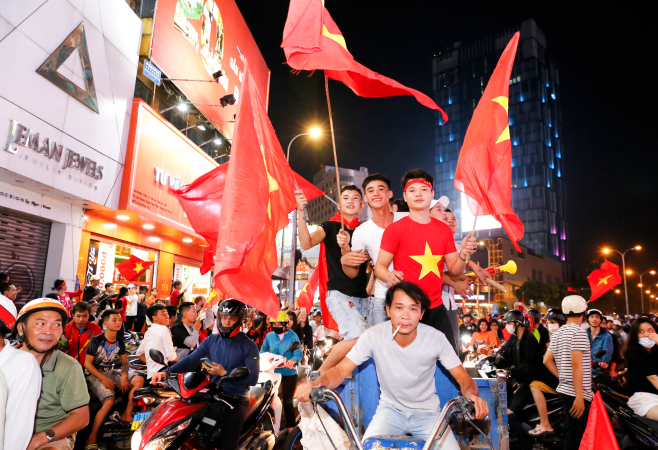 The national flag of Vietnam is flying above a city street during a football victory celebration.
Vietnam Flag Souvenirs – What You Can & Cannot Buy
Allowed & popular:
- High-quality embroidered flags (available at Dong Xuan Market – Hanoi, Ben Thanh Market – HCMC)
- Flag pins, keychains, and patches
- Postcards and professional prints
Items considered disrespectful or inappropriate (such as damaged flags or offensive designs) may be subject to confiscation:
- Clothing with the flag is generally allowed, but using the flag on inappropriate items, such as underwear, is considered disrespectful
- Damaged or faded flags meant for disposal
If you want to purchase a Vietnam flag as a souvenir, you can buy one at:
- Traditional markets
- Souvenir shops in tourist districts
- Official craft stores near historical museums
- Having an authentic, properly designed flag makes for a meaningful keepsake.
FAQs About the Official Vietnam Flag
What does the Vietnam flag represent?
It symbolizes unity, independence, and the collective strength of the Vietnamese people through its red background and golden star.
When was the Vietnam flag officially adopted?
It became the national flag on July 2, 1976, after national reunification.
What is the correct color of the star?
The star is officially golden yellow.
What is the official flag ratio?
The Vietnam flag uses a 2:3 ratio with a centrally positioned five-pointed star.
Can I bring a Vietnamese flag souvenir home?
Yes, small souvenir flags are perfectly fine to purchase and take home in your luggage.
Final Thoughts: Why the Vietnam Flag Matters to Travelers
The official Vietnam flag is more than a national emblem—it is a living symbol of a country shaped by resilience, unity, and cultural pride. Understanding its meaning enriches your travel experience, allowing you to see Vietnam not only as a destination of natural beauty and vibrant cities but also as a nation with a deep historical legacy.
Whether you see it flying above Ba Dinh Square, displayed proudly during Tet celebrations, or hanging outside small homes across the countryside, the flag offers a meaningful connection to Vietnam’s identity and spirit.
Related Articles
- Vietnamese Zodiac Years: 12 Animals, Years & Personality Traits
- Cham Island Travel Guide: Things to Do, Tours & Travel Tips
- Vietnam Emergency Number Guide: Who to Call in an Emergency
- Vietnam Golden Visa Guide: Everything You Need to Know
- What Is the Vietnamese Hat? History, Culture & Meaning
- Best Vietnam eSIM for Tourists: Plans, Prices & Setup
- Vietnam Sleeper Bus Guide: Experience, Comfort & Safety
- Vietnam Visa for Children: Rules, Requirements & Family Guide
- Vietnam Nightlife Guide 2026: Best Cities, Bars & Night Experiences
- Vietnam Visa for Cruise Travelers: Rules, Ports & Application Guide

HOW CAN WE HELP?
 NEED HELP 24/7
 United States
+1 949 346 9868
United States
+1 949 346 9868
 United Kingdom
+44 0330 822 7696
United Kingdom
+44 0330 822 7696
 Singapore
+65 6485 3630
Singapore
+65 6485 3630
 Viber
+65 8174 8526
Viber
+65 8174 8526

APPLY WITH CONFIDENCE