Vietnam Visa For Australian Citizens: Check Requirements
With an Australian passport, traveling to Vietnam is simple and hassle-free. An eVisa is now available for admission to Australia. Our visa policy makes it simple for travelers to get the most out of their time in Vietnam. At the Vietnam e-Visa Services, we're providing you the online service as a way to acquire a Vietnam eVisa more conveniently.
There is a preferential visa for citizens of Australia who wish to visit Vietnam. This visa will allow these citizens to bypass the usual procedure of obtaining a visa.
- Do Australian Citizens Need a Visa for Vietnam?
- Vietnam Visa Requirements for Australian Citizens
- Vietnam Visa Cost for Australian Passport Holders
- Other Vietnam Visa Options for Australians
- Visa on Arrival vs. E-Visa: Which is Better for Australians?
- Exemptions & diplomatic passport holders
- FAQ About Vietnam Travel Information for Australians
- Common Questions About the Vietnam Visa for Australian Citizens
- Conclusion: Planning a compliant and easy Vietnam trip

Do Australian Citizens Need a Visa for Vietnam?
Yes. Australia is not on Vietnam's visa exemption list. So, Australians NEED to obtain a valid visa to enter the country. With the Vietnam eVisa, Australian citizens can get a tourist visa easily and are not required to visit the Embassy or Consulate to obtain a Vietnamese visa.
What is the Vietnam eVisa for Australians?
The Vietnam eVisa is an electronic travel authorization issued by the Vietnamese immigration authorities. It allows eligible foreign travelers, including Australian citizens, to enter Vietnam for tourism or business purposes.
The online system simplifies the visa process and reduces paperwork for international visitors.
How Long Can Australians Stay in Vietnam with an e-Visa?
The Vietnam e-Visa allows Australian citizens to stay for up to 90 days per entry.
| Feature | Detail |
| Maximum stay | 90 days (single or multiple entry options available) |
| Validity period | 90 days from the start date you select on your application |
| Entry types | Single entry or multiple entry |
| Permitted purposes | Tourism, business meetings, visiting family, transit |
The 90-day count begins on the date printed on your approved e-Visa document. You cannot enter before that date or stay beyond it without applying for an extension or a new visa.
Important: Once your 90-day stay expires, you must leave Vietnam. Re-entering requires a new e-Visa application. There is no automatic re-entry privilege.
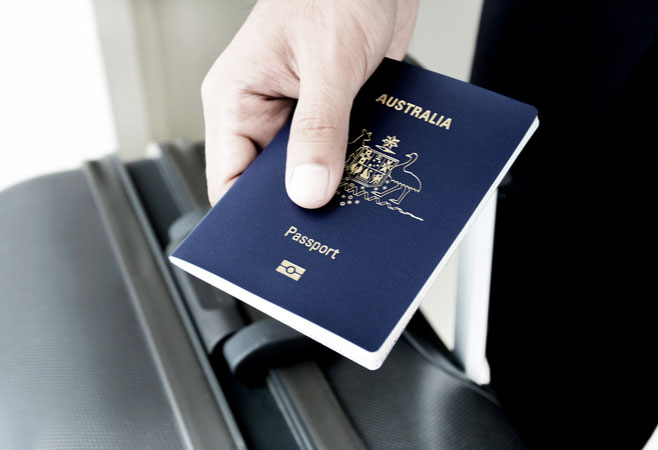
Vietnam Visa Requirements for Australian Citizens
Before starting the application process, Australians should prepare the necessary documents and information. Australian applicants generally need:
- A valid Australian passport with at least 6 months' validity from the arrival date
- At least two blank passport pages for immigration stamps
- A scanned copy of the passport bio page
- A recent passport-style photograph
- A valid email address
- A debit or credit card for online payment
- Travel details, including intended arrival and departure dates
Once you prepare enough necessary documents, you can start applying for a Vietnamese eVisa.
Note: Applicants should ensure that all information matches their passport exactly to avoid delays or rejection.
How to apply for an e-Visa to Vietnam?
If you're in a rush and need your visa, go with expedited processing. Using our service instead of alternative techniques will just take you a few hours. A 15-minute time limit applies to the online application process. Upon acceptance, you will get an email with all the necessary visa information.
To apply for an e-Visa to Vietnam, you just need to follow 04 basic steps below:
- Step 1: Fill out the secure online application form. To process your e-Visa to Vietnam, fill out the online forms at the link Apply for Vietnam e-Visa. You must include all of the candidates' personal information, including Full name, gender, birth date, passport number, and date of arrival/departure.
- Step 2: Please double-check your information to confirm it is correct and full. Pay the e-visa fee using an electronic payment (Visa, MasterCard, American Express, and PayPal).
- Step 3: Receive the confirmation of your visa application form via email. The e-Visa will be processed and granted online before being mailed to you.
- Step 4: Have your visa stamped in your passport upon arrival. Remember to download and print out the Vietnam e-Visa that we issued you through email.

Vietnam Visa Cost for Australian Passport Holders
The cost of a Vietnam visa for Australian citizens depends on the visa type, processing speed, and application method selected.
Visa fees may vary due to:
- Government immigration charges
- Exchange rate fluctuations
- Additional service or processing fees
Travelers are advised to check the latest fees before submitting their application.
Vietnam eVisa Processing Time
Australian travelers can usually choose from several processing options depending on how quickly they need their Vietnam eVisa.
- Standard Processing: Suitable for travelers who plan ahead and wish to receive their eVisa within approximately 5 business days.
- Urgent Processing: Recommended for travelers who need their eVisa within approximately 2 business days.
- Super Urgent Processing: Available for emergency travel situations requiring eVisa approval within approximately 1 business day.
Recommendation for Australian Travelers
Australian passport holders are strongly advised to apply for their Vietnam eVisa at least 15 business days before departure. Applying early helps avoid unexpected delays, additional urgent processing fees, and disruptions caused by weekends or Vietnamese public holidays such as Tet (Lunar New Year), when immigration offices may be closed.
Other Vietnam Visa Options for Australians
Embassy or Consular Visa (Sticker Visa)
This visa option may be suitable for travelers planning longer stays or those with special travel purposes. Applications can be submitted through the Vietnamese Embassy or Consulates in Australia, such as in Canberra, Sydney, or Perth.
Compared to the e-Visa process, embassy visas usually take longer to process and may require additional documents.
Visa on Arrival (VOA)
Visa on Arrival is available in certain cases through approved travel or visa agencies. However, it is generally not the preferred option for Australian travelers because the Vietnam e-Visa process is simpler and more convenient.
VOA may be applicable if:
- You are invited or sponsored by a Vietnamese government authority
- You are joining a package tour organized by a Vietnamese travel company
5-Year Visa Exemption
A 5-year visa exemption certificate is available for overseas Vietnamese and their immediate family members, including spouses and children.
Eligible applicants can apply through the Vietnamese immigration authorities or the Vietnamese diplomatic offices abroad.
Visa on Arrival vs. E-Visa: Which is Better for Australians?
Here’s a breakdown to help you decide:
| Feature | E-Visa | VOA |
| Apply online | Yes | Yes (via agent) |
| Airport collection | No | Yes |
| Border crossings | Some | No |
| Processing time | 1-5 days (depending on rush visa services) | 3–5 days (plus arrival wait) |
| Fees | Lower | Higher |
Exemptions & diplomatic passport holders
Some Australian citizens may not need a visa:
- Holders of the APEC Business Travel Card: Exempt for 90 days.
- Transit Travelers: May transit visa-free for under 24 hours, conditions apply.
- Children: If traveling with a parent and included in the same passport.
Diplomatic and official passport holders must coordinate with embassies and receive special processing. The Australian Embassy in Ho Chi Minh City can assist if complications arise.

FAQ About Vietnam Travel Information for Australians
If you are planning a trip to Vietnam from Australia, understanding important travel information such as safety, time differences, flights, currency, and language can help make your journey smoother and more enjoyable.
Is Vietnam Safe for Australian Travelers?
Yes. Vietnam is generally considered a safe destination for Australian travelers. The country is well known for its friendly locals, vibrant culture, affordable travel experiences, and relatively low rates of violent crime against tourists.
However, visitors should still take normal travel precautions, including:
- Staying alert in crowded areas
- Watching for pickpocketing and petty theft
- Using licensed transportation services
- Following local safety advice and regulations
With proper preparation, most Australians enjoy a safe and memorable experience in Vietnam.
What Is the Time Difference Between Australia and Vietnam?
Vietnam follows Indochina Time (ICT), which is UTC+7 year-round. Since Australia has multiple time zones, the time difference depends on your departure city. Common time differences:
| Australian City | Time Difference |
| Sydney | Vietnam is 3 hours behind |
| Melbourne | Vietnam is 3 hours behind |
| Brisbane | Vietnam is 3 hours behind |
| Perth | Vietnam is 1 hour behind |
| Adelaide | Vietnam is 2.5 hours behind |
Important Note: Vietnam does not observe daylight saving time. Australian travelers should check the time difference carefully when planning flights, hotel check-ins, airport transfers, tours, or business meetings.
How Far Is Vietnam From Australia?
Vietnam is one of the closest and most accessible destinations in Southeast Asia for Australian travelers. Approximate flight distances:
| Route | Distance |
| Sydney → Ho Chi Minh City | ~6,800 km |
| Melbourne → Ho Chi Minh City | ~6,700 km |
| Perth → Ho Chi Minh City | ~5,300 km |
| Sydney → Hanoi | ~7,700 km |
Are There Direct Flights From Australia to Vietnam?
Yes. Several airlines operate direct flights between Australia and Vietnam. Average direct flight times:
| Route | Flight Duration |
| Sydney → Ho Chi Minh City | 8–9 hours |
| Melbourne → Ho Chi Minh City | 8–9 hours |
| Perth → Ho Chi Minh City | 6–7 hours |
| Sydney → Hanoi | 9–10 hours |
Popular Airlines:
- Vietnam Airlines
- Qantas
- Jetstar Airways
- VietJet Air
Major International Airports in Vietnam:
- Tan Son Nhat International Airport
- Noi Bai International Airport
- Da Nang International Airport
What Currency Is Used in Vietnam?
The official currency of Vietnam is the Vietnamese Dong (VND). Approximate exchange rate:
- 1 AUD ≈ 18,000–19,000 VND
- 100 AUD ≈ 1.8–1.9 million VND
Exchange rates fluctuate regularly depending on the market.
Important Currency Tips: The Australian Dollar is not commonly accepted in Vietnam. Travelers are advised to exchange money into Vietnamese Dong or carry some US Dollars before arrival.
Can Australians Use Credit Cards and Cash in Vietnam?
Yes. Both cash and card payments are commonly used in Vietnam. Payment information:
- Cash is widely used across the country
- ATMs are available in major cities and tourist areas
- Credit cards are accepted at hotels, shopping malls, and larger restaurants
- Smaller local shops, street food vendors, and markets may only accept cash
Carrying a combination of cash and cards is recommended for convenience.
Can Australians Travel to Vietnam Without Speaking Vietnamese?
Yes. Australian travelers can comfortably visit Vietnam without speaking Vietnamese.
English is commonly spoken in major cities, tourist attractions, hotels, restaurants, and transportation services, especially in destinations such as Ho Chi Minh City, Hanoi, and Da Nang.
However, learning a few simple Vietnamese phrases can improve communication and create a more enjoyable cultural experience with local people.
Common Questions About the Vietnam Visa for Australian Citizens
Can Australians apply for a Vietnam visa online?
Yes. Australian citizens can apply online through the Vietnam eVisa system.
Is the Vietnam eVisa available for tourism and business?
Yes. The Vietnam eVisa is commonly issued for tourism and short-term business activities.
How long does Vietnam eVisa processing take?
Processing usually takes between 3 and 5 business days, although urgent services may be faster.
Can Australian citizens get a Vietnam visa on arrival?
No. The traditional visa-on-arrival system ended for Australian passport holders. You must have a pre-approved visa (e-Visa is best).
How far in advance should Australians apply for an e-Visa?
Apply at least 15 business days before departure. Normal processing takes 5 business days, but delays occur during Vietnamese public holidays. Tet holiday (January or February) can extend processing to 10 business days or more.
Is the e-Visa valid for multiple entries?
Yes. Australian citizens can choose between single-entry and multiple-entry options during the application process. Multiple entry fees are higher than single entry.
Do Australian children need a separate visa?
Yes. Every traveler, including infants and minors, must have their own approved e-Visa linked to their passport. Family members cannot share a single visa.
Conclusion: Planning a compliant and easy Vietnam trip
The process for obtaining a Vietnam visa for Australian travelers is clear and accessible if approached with accurate knowledge. From understanding your eligibility to selecting the correct visa type and applying through proper channels, every step matters.
Staying compliant with Vietnam’s visa regulations not only ensures lawful entry but also helps you enjoy a stress-free journey. Whether you’re heading to the Mekong Delta, ancient Hoi An or the bustling streets of Saigon, start with a legally sound visa process - and the rest of Vietnam awaits.
Vietnam Visa Requirements for Australia Citizens FAQs
How to get a Vietnam visa in Australia?


How much is a Vietnam tourist visa from Australia?
Where to get an e-visa for Vietnam in Australia?
Vietnam visa for Australians: Which countries need visas?
How much is the stamping fee for a Vietnam visa from Australia?
What size passport photo for a Vietnam visa for Australians?

HOW CAN WE HELP?
 NEED HELP 24/7
 United States
+1 949 346 9868
United States
+1 949 346 9868
 United Kingdom
+44 0330 822 7696
United Kingdom
+44 0330 822 7696
 Singapore
+65 6485 3630
Singapore
+65 6485 3630
 Viber
+65 8174 8526
Viber
+65 8174 8526

APPLY WITH CONFIDENCE